
Congo Tourmaline
What Is Tourmaline?
Tourmaline is a naturally occurring gemstone known for its exceptional range of colors and strong crystal structure. It belongs to a family of complex borosilicate minerals that form in elongated, prism-shaped crystals within pegmatite rocks.
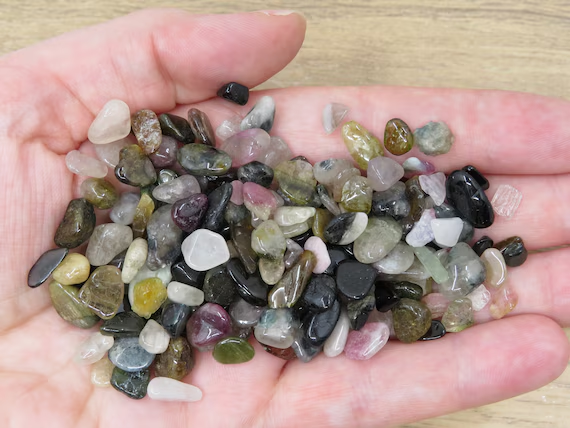
Tourmaline can occur in green, blue, pink, red, yellow, black, and even multi-colored varieties such as “watermelon” tourmaline. Its durability and brilliance make it one of the most versatile and sought-after gemstones in the global jewelry market.
Technical Specifications
• Mineral Group: Complex borosilicate
• Crystal System: Trigonal
• Hardness: 7 – 7.5 on the Mohs scale
• Specific Gravity: 3.0 – 3.3
• Transparency: Transparent to opaque
• Common Colors: Green, pink, blue, red, bi-color, tri-color
• Formation Type: Pegmatite-hosted mineral deposits
• Optical Property: Pleochroic (shows different colors from different angles)
These characteristics make tourmaline durable enough for everyday jewelry while offering outstanding visual appeal.
Source Areas in Congo
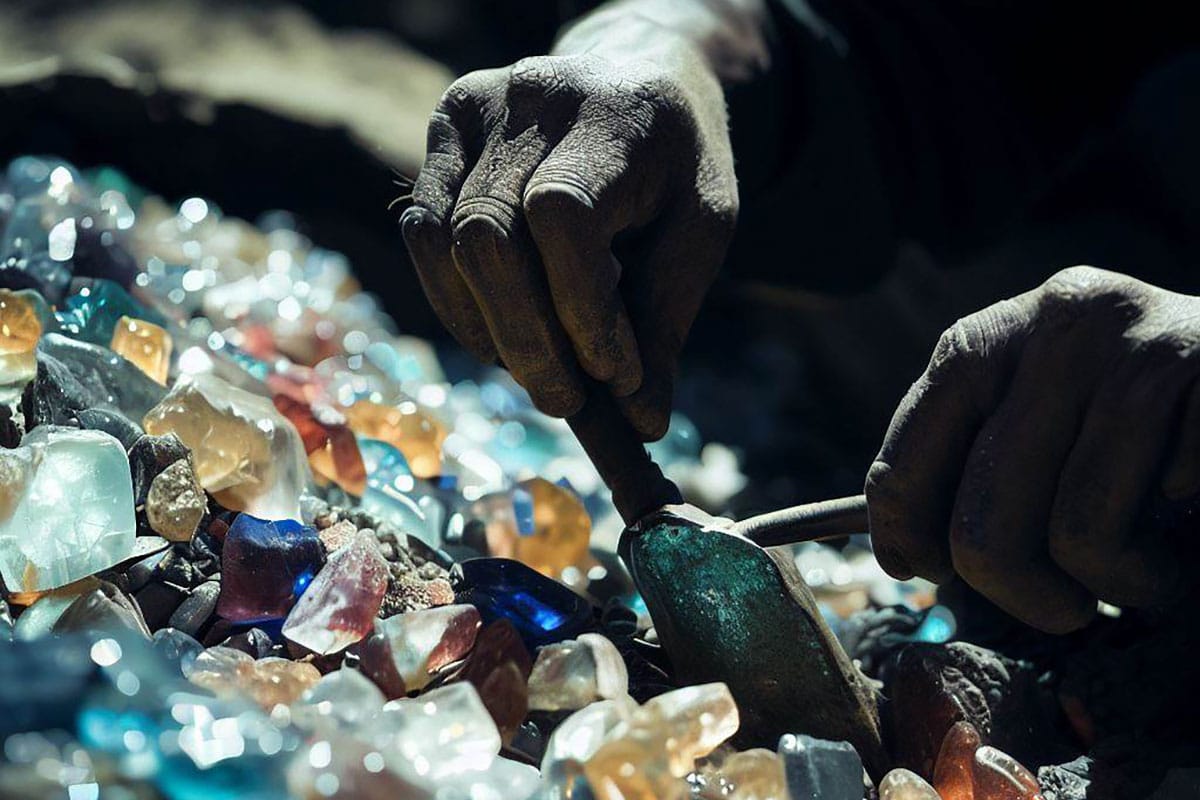
The Democratic Republic of the Congo (DRC) is one of Africa’s important sources of high-quality tourmaline. Production is largely artisanal and concentrated in mineral-rich pegmatite zones.
Key producing areas include:
• North Kivu – Particularly around Rubaya and Masisi, known for vibrant green, pink, and multi-zoned crystals.
• South Kivu – Areas near Numbi and Kalehe produce richly colored gem-grade stones.
• Manono (Tanganyika region) – Historically known for pegmatite minerals, including high-quality tourmaline.
These deposits are formed in granitic pegmatites where slow cooling allows large, well-formed crystals to develop.
Export Destinations & Market Overview
Congo tourmaline is primarily exported as rough stones and later cut and polished in major international gemstone hubs.
Major trading markets include:
• Thailand
• China
• United States
• Germany and other European markets
Some material is traded regionally through neighboring countries before reaching international buyers. Increasing formalization efforts within the DRC aim to strengthen traceability, compliance, and export regulation.
Uses of Congo Tourmaline
Fine Jewelry
Tourmaline is widely used in rings, earrings, pendants, bracelets, and necklaces because of its durability and rich colors.
Collector Specimens
Well-formed crystals, especially multi-colored pieces, are highly valued by mineral collectors.
Decorative and Metaphysical Markets
Certain varieties are popular in wellness and decorative markets due to their color diversity and natural crystal structure.
Scientific Applications
Some tourmaline varieties exhibit piezoelectric and pyroelectric properties, giving them specialized uses in scientific and industrial applications.
Frequently Asked Questions
What makes Congo tourmaline unique?
Congo tourmaline is known for its vivid color saturation, strong clarity, and striking natural zoning patterns. Stones from regions like Rubaya are especially prized.
Is tourmaline suitable for everyday jewelry?
Yes. With a hardness of 7–7.5 on the Mohs scale, it is durable enough for everyday wear when properly set.
How is tourmaline valued?
Value depends on several factors including:
• Color intensity and rarity
• Clarity
• Size (carat weight)
• Cut quality
• Origin and traceability
Is tourmaline mined ethically in Congo?
Much production is artisanal. Ongoing improvements in formal mining practices and export regulation aim to support responsible sourcing and improved supply chain transparency.